Uploading Custom Sounds to My Ozlo Sleepbuds 2
Kyle Niewiada on August 24, 2026
24 Minute Read | Medium project
My noise-blocking journey started in 2019 when I was trying to mask the sound of HVAC ducting heating up and popping in the ceiling throughout the night. I picked up a noise machine and hacked ESPHome controls into it. But it wasn’t enough to drown out the spontaneous noises during sleep. If you’re new here, I’m sensitive to sounds. I needed something more.
Table of Contents
Noise Masking Journey
Desperate for a peaceful sleep, I purchased the original Bose Noise-masking Sleepbuds. They were unusually small, had a great battery life, and helped block the noises that were waking me up. They were fantastic except for the silver-zinc battery failures, which led to all products being recalled. Luckily, Bose was offering a free replacement with the Bose Sleepbuds II.
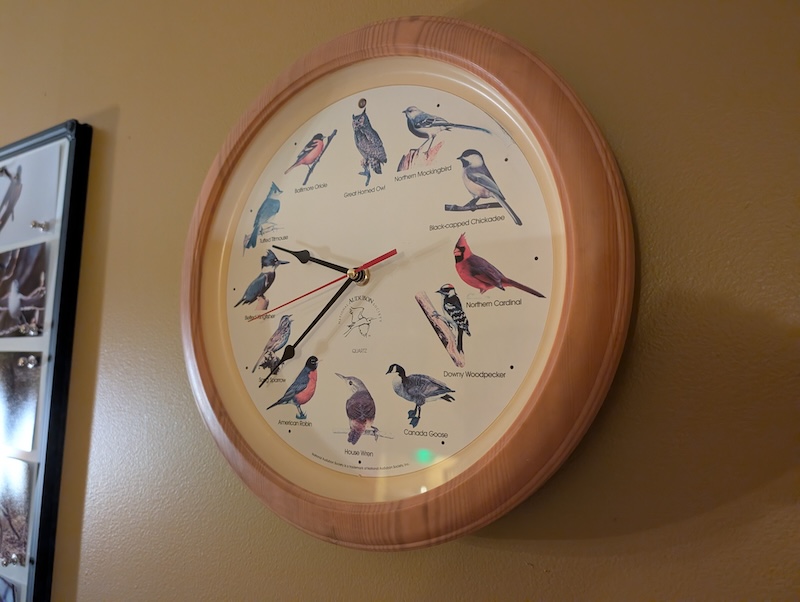
Around this time, Bose released a handful of new sound effects, such as “Songbirds”, that I fell in love with. In hindsight, gravitating toward bird calls makes a lot of sense.
Years later, Bose discontinued their Sleepbuds line after failing to reach their desired level of adoption. Ozlo, a company formed by many former Bose employees, was created. Ozlo purchased the intellectual property and research from Bose, and announced they would be bringing the Sleepbuds back under their new company.
I backed the Ozlo Sleepbuds on Indiegogo and used them for over 2 years without any issues. Unfortunately, my favorite “Songbirds” masking sound was no longer present. Luckily, the Ozlo Sleepbuds were a bit different, as they allowed a user to stream their own audio over Bluetooth instead of relying on the onboard sounds.
However, whenever I did this, the battery in my Sleepbuds wouldn’t make it through the night. I tried lowering the volume and using the power-saving modes (which stop playback after you’ve fallen asleep), but then the Sleepbuds no longer masked noises. So I settled for some of the built-in sounds.
I gave up on the idea of streaming audio until…
Ozlo Sleepbuds 2
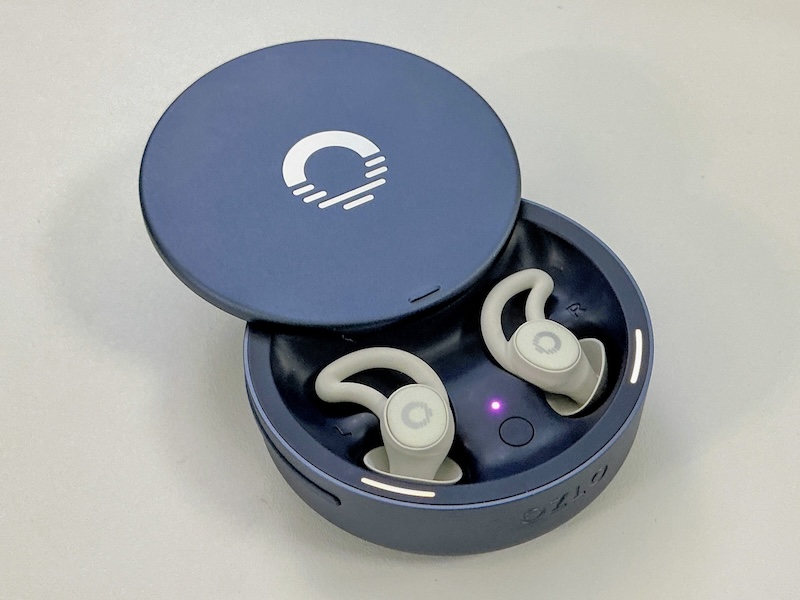
Ozlo recently launched their Sleepbuds 2. My current pair of Ozlo Sleepbuds had a pretty weak battery life, so I decided it was time to upgrade.
After the first night of sleeping with the Sleepbuds 2, I realized the battery life had been substantially improved. I woke up with ~60% battery left when listening to the onboard sounds. On my older Sleepbuds, the same test would result in a paltry 10% battery.
Given the boosted battery performance, I figured this would be a good opportunity to switch from the onboard sounds and test streaming my old “Songbirds” loop to the Ozlo Sleepbuds 2.
It shouldn’t come as a surprise, but the Sleepbuds 2 streamed my sounds throughout the night with plenty of battery to spare (~45%)!
But it felt kinda clunky. Every night, I’d have to pause the built-in sounds on my Sleepbuds, open up a special third-party music player, and loop my Songbirds track.
Other inconveniences include:
- Bluetooth streaming drains an additional ~15% of my battery each night.
- If I step out of range in the middle of the night to use the bathroom, the signal drops and I hear an unpleasant crackle in my ears.
- If my phone reboots to install OS updates, the app updates, or anything crashes, the audio stops.
These inconveniences annoyed me so much that I found myself determined to transfer my favorite masking sounds back onto my Sleepbuds.
So I did.
Uploading Custom Sounds to Ozlo Sleepbuds 2
This process is incredibly technical. I am not planning to support future versions of the Ozlo app or Sleepbuds. Instead, I am providing my research and tooling that I used to successfully upload custom sounds to my Ozlo Sleepbuds 2 today. This may continue to work in the future.
It is possible to point an AI agent to this page (like Claude) to help guide you through all of the steps and run them from your machine. Run this at your own risk.
As I have accomplished my goal of transferring my sounds, I won’t be taking this further.
Upload Options
I came up with four possible approaches to get audio onto my Ozlo Sleepbuds 2.
- Bribe someone at Ozlo to do it for me. 💸
- ❌ I’m not sure I can afford this.
- ❌ Doesn’t seem very ethical.
- Create my own proxy layer (like Charles Proxy during the PS3 days) to intercept audio fetch calls being made to Ozlo’s servers and redirect them to my own files.
- ❌ Requires me to understand how their servers work and how Ozlo packages its sound blobs.
- ❌ Might not be able to bypass SSL requests from within the Ozlo app
- Research the protocols being used over Bluetooth between the Ozlo app and the Sleepbuds to replicate the transfer process myself.
- ✅ Very complete solution. Unlikely to break unless a new firmware significantly changes things.
- ❌ Requires a lot of work since I’d need to make my own app and understand most of it.
- Patch the app with hooks to point at my own local file when the app transfers sounds over.
- ✅ Least complicated (comparatively).
- ❌ Very brittle. Patches will usually only work on specific versions of the Ozlo app and can easily break the next time the app is updated.
- ❌ Only works as long as the app is supported on modern devices.
I went with Option 4, patching the Ozlo app, because it seemed like the quickest to implement. If they ever stop supporting the app, I guess I’ll have to go back and create my own like chillee151/SleepBuds2Revival.
Even better, once the sounds are loaded onto the Sleepbuds, the patches don’t need to hang around anymore. So future app updates shouldn’t really matter!
With help from Claude, it only took a night to research how the app worked, learn how the audio was encoded, where to patch the code, and successfully transfer over a truncated copy of my Songbirds sound.
That kind of speed from idea to delivery astonishes me.
Patching the Ozlo App
🙏 Ozlo, if you’re reading this, please don’t intentionally block users from doing this by adding additional firmware checks or app obfuscation. Some of us use these Sleepbuds loaded with other sounds for accessibility reasons and would like our preferred masking sounds to continue working without our phone. 💙
This section outlines how I patched the Ozlo app and uploaded my own local sound loops onto the Ozlo Sleepbuds 2. This method successfully transferred custom sound loops to both my “Original Ozlo Sleepbuds” and “Ozlo Sleepbuds 2”. But your mileage may vary.
Depending on your experience, I imagine most people can complete this in 1-4 hours the first time (strongly dependent on technical expertise). After that, it should only take 5-15 minutes to set up a new sound file.
When a user transfers new sounds to their Sleepbuds:
- The Ozlo app downloads the specified sound blob from Ozlo’s servers and saves it as a file stored on the phone.
- Instead of the app transferring this file, we push a custom sound to the phone and patch the app to read back ours.
- The app runs a checksum on the sound file before transferring to make sure it matches the value for the downloaded sound file. If it’s intact, the app will start copying the sound over to the Sleepbuds.
- We patch the app’s checksum to always succeed, tricking the app into accepting our swapped sound file.
If you want to build your own tool, the additional technical findings are worth reviewing.
Prerequisites
- macOS or Linux
- Windows via WSL is untested
- A real Android device (not an emulator) connected over a USB cable
- I have no idea how to patch iOS apps
- The Ozlo app installed with Sleepbuds already paired and working
- I used Ozlo app version
2.62.3 (3041)released onAugust 6, 2026
- I used Ozlo app version
- Audio in any format that
ffmpegcan read- Must be <=
30.55 seconds - Should loop (or use a crossfade to hide the loop)
- Must be <=
- Internet
- Every transfer still hits Ozlo’s servers, even though the custom sound replaces theirs.
These were my firmware versions for my Ozlo Sleepbuds 2 and Case:
- Smart Case:
02.11.2606025 - Left Sleepbud:
02.11.2606011 - Right Sleepbud:
02.11.2606011 - Bluetooth:
02.11.2606007
Overview

Helper Scripts
Below are two helper scripts that assist in the transfer of custom sounds to the Sleepbuds.
ozlo-patch.py
Modifies the Ozlo app’s code to swap in your local file during the transfer process and bypasses the checksum check so the custom audio isn’t rejected.
ozlo-patch.py
1
2
3
4
5
6
7
8
9
10
11
12
13
14
15
16
17
18
19
20
21
22
23
24
25
26
27
28
29
30
31
32
33
34
35
36
37
38
39
40
41
42
43
44
45
46
47
48
49
50
51
52
53
54
55
56
57
58
59
60
61
62
63
64
65
66
67
68
69
70
71
72
73
74
75
76
77
78
79
80
81
82
83
84
85
86
87
88
89
90
91
92
93
94
95
96
97
98
99
100
101
102
103
104
105
106
107
108
109
110
111
112
113
114
115
116
117
118
119
120
121
122
123
124
125
126
127
128
129
130
131
132
133
134
135
136
137
138
139
140
141
142
143
144
145
146
147
148
149
150
151
152
153
154
155
156
157
158
159
160
161
162
163
164
165
166
167
168
169
170
171
172
173
174
175
176
177
178
179
180
181
182
183
184
185
186
187
188
189
190
191
192
193
194
195
196
197
198
199
200
201
202
203
204
205
206
207
208
209
210
211
212
213
214
215
216
217
218
219
220
221
222
223
224
225
226
227
228
229
230
231
232
233
234
235
236
237
238
239
240
241
242
243
244
245
246
247
248
249
250
251
252
253
254
255
256
257
258
259
260
261
262
263
264
265
266
267
268
269
270
271
272
273
274
275
276
277
278
279
280
281
282
283
284
285
286
287
288
289
290
291
292
293
294
295
296
297
298
299
300
301
302
303
304
305
306
307
308
309
310
311
312
313
314
315
316
317
318
319
320
321
322
323
324
325
326
327
328
329
330
331
332
333
334
335
336
337
338
339
340
341
342
343
344
345
346
347
348
349
350
351
352
353
354
355
356
357
358
359
360
#!/usr/bin/env python3
"""Apply the two Ozlo Sleepbuds smali edits to an apktool output tree.

    python3 ozlo-patch.py work [--dry-run | --verify | --print-block]

Locates the code by method signature and field names, and reads the
version-specific values (.locals, register numbers) out of your own files.
Stops rather than guessing. Backups go to <tree>-ozlo-backups/.

Author: Anthropic Claude
Model: claude-opus-5, claude-opus-4-8
Date Generated: August 2026
Script Version: 2026.8.0

Note: This file was authored entirely by AI based on user prompts.
Human intervention was limited to prompt engineering, light review, and testing
by Kyle Niewiada.
"""
import argparse, os, re, shutil, sys

BEGIN = "# ===== OZLO INJECT BEGIN ====="
END   = "# ===== OZLO INJECT END ====="
SCRATCH = 7    # registers the injected block needs
MAX_REG = 15   # the invoke opcodes used can only address v0-v15

EMIT  = "emit(Lokhttp3/ResponseBody;Lkotlin/coroutines/Continuation;)Ljava/lang/Object;"
SAVE  = "saveSoundToFile(Lokhttp3/ResponseBody;Ljava/io/File;)V"
WDIR  = os.path.join("sounds", "data", "workers")
CRC   = "ExpectedCRC"
AREEQ = "Lkotlin/jvm/internal/Intrinsics;->areEqual(Ljava/lang/Object;Ljava/lang/Object;)Z"


class Stop(Exception):
    pass


def smali_files(root, pred):
    out = []
    for d, _, fs in os.walk(root):
        for f in fs:
            if not f.endswith(".smali"):
                continue
            p = os.path.join(d, f)
            try:
                t = open(p, encoding="utf-8", errors="replace").read()
            except OSError:
                continue
            if pred(p, t):
                out.append(p)
    return sorted(out)


def backup(root, path):
    # Outside the tree: .orig files under smali*/ confuse apktool b.
    dest = os.path.join(os.path.abspath(root.rstrip(os.sep)) + "-ozlo-backups",
                        os.path.relpath(path, root) + ".orig")
    os.makedirs(os.path.dirname(dest), exist_ok=True)
    shutil.copy2(path, dest)


# --- edit 1: substitute the downloaded file ---------------------------------

def find_inject(root):
    hits = smali_files(root, lambda p, t: WDIR in p and SAVE in t and EMIT in t
                       and "$file:Ljava/io/File;" in t)
    if len(hits) == 1:
        return hits[0]
    if not hits:
        loose = smali_files(root, lambda p, t: "saveSoundToFile" in t)
        if loose:
            raise Stop("No class matched all of: path under %s, the emit() signature, a $file "
                       "field.\nsaveSoundToFile does appear in: %s\nFind the one that saves the "
                       "download and reads the same File back, and patch it by hand. Anything "
                       "under main/presentation is the speaker preview, not the transfer."
                       % (WDIR, ", ".join(loose)))
        raise Stop("saveSoundToFile not found anywhere. Either this is not a disassembled Ozlo "
                   "APK, or the app is now obfuscated (in which case the code has to be found "
                   "from scratch).")
    raise Stop("Expected 1 sound-transfer class, found %d:\n  %s\nPatch only the one whose "
               "emit() saves the download and re-reads it." % (len(hits), "\n  ".join(hits)))


def read_emit(text, rel):
    lines = text.splitlines()
    start = next((i for i, l in enumerate(lines)
                  if l.strip().startswith(".method") and EMIT in l), None)
    if start is None:
        raise Stop("Found the class but not its emit() method in %s. Signature changed; patch "
                   "the method that calls saveSoundToFile by hand." % rel)
    end = next((i for i in range(start + 1, len(lines))
                if lines[i].strip() == ".end method"), len(lines))

    loc = next((i for i in range(start, end)
                if re.match(r"\.locals\s+\d+$", lines[i].strip())), None)
    if loc is None:
        raise Stop("emit() has no readable .locals line in %s." % rel)
    n = int(lines[loc].split()[1])

    saves = [i for i in range(start, end) if SAVE in lines[i]]
    if len(saves) != 1:
        raise Stop("Expected 1 saveSoundToFile call inside emit(), found %d in %s. If 0, the "
                   "download no longer goes via a file and this approach needs rethinking."
                   % (len(saves), rel))
    return loc, n, saves[0]


def block(base, cls):
    f, ctx, zero, tmp, s, flag, lbl = (f"v{base + i}" for i in range(SCRATCH))
    return f"""
{BEGIN}
    # scratch registers v{base}-v{base + SCRATCH - 1} derived from .locals {base}
    iget-object {f}, p0, {cls}->$file:Ljava/io/File;

    iget-object {ctx}, p0, {cls}->this$0:Lcom/ozlo/vanwinkle/sounds/data/workers/SoundTransferWorker;

    invoke-virtual {{{ctx}}}, Landroidx/work/ListenableWorker;->getApplicationContext()Landroid/content/Context;

    move-result-object {ctx}

    const/4 {zero}, 0x0

    invoke-virtual {{{ctx}, {zero}}}, Landroid/content/Context;->getExternalFilesDir(Ljava/lang/String;)Ljava/io/File;

    move-result-object {ctx}

    if-eqz {ctx}, :ozlo_done

    invoke-virtual {{{f}}}, Ljava/io/File;->getName()Ljava/lang/String;

    move-result-object {tmp}

    const-string {s}, "left"

    invoke-virtual {{{tmp}, {s}}}, Ljava/lang/String;->contains(Ljava/lang/CharSequence;)Z

    move-result {flag}

    if-eqz {flag}, :ozlo_right

    const-string {s}, "mine_left.bin"

    goto :ozlo_have

    :ozlo_right
    const-string {s}, "mine_right.bin"

    :ozlo_have
    new-instance {tmp}, Ljava/io/File;

    invoke-direct {{{tmp}, {ctx}, {s}}}, Ljava/io/File;-><init>(Ljava/io/File;Ljava/lang/String;)V

    invoke-virtual {{{tmp}}}, Ljava/io/File;->exists()Z

    move-result {flag}

    if-eqz {flag}, :ozlo_done

    invoke-static {{{tmp}}}, Lkotlin/io/FilesKt;->readBytes(Ljava/io/File;)[B

    move-result-object {tmp}

    invoke-static {{{f}, {tmp}}}, Lkotlin/io/FilesKt;->writeBytes(Ljava/io/File;[B)V

    array-length {flag}, {tmp}

    new-instance {tmp}, Ljava/lang/StringBuilder;

    invoke-direct {{{tmp}}}, Ljava/lang/StringBuilder;-><init>()V

    const-string {lbl}, "INJECTED bytes="

    invoke-virtual {{{tmp}, {lbl}}}, Ljava/lang/StringBuilder;->append(Ljava/lang/String;)Ljava/lang/StringBuilder;

    invoke-virtual {{{tmp}, {flag}}}, Ljava/lang/StringBuilder;->append(I)Ljava/lang/StringBuilder;

    invoke-virtual {{{tmp}}}, Ljava/lang/StringBuilder;->toString()Ljava/lang/String;

    move-result-object {tmp}

    const-string {s}, "OZLOPATCH"

    invoke-static {{{s}, {tmp}}}, Landroid/util/Log;->e(Ljava/lang/String;Ljava/lang/String;)I

    :ozlo_done
{END}
"""


def patch_inject(root, dry):
    path = find_inject(root)
    rel = os.path.relpath(path, root)
    text = open(path, encoding="utf-8").read()
    if BEGIN in text:
        return "SKIP", rel, "already patched"

    loc, n, save = read_emit(text, rel)
    if n >= 10:
        raise Stop(".locals is already %d in %s, which usually means the file was patched and "
                   "the marker comment removed. Re-disassemble and run once on a clean tree." % (n, rel))
    top = n + SCRATCH - 1
    if top > MAX_REG:
        raise Stop(".locals %d would put the scratch registers at v%d-v%d, but the invoke "
                   "opcodes in the block can only address v0-v%d. The block needs rewriting to "
                   "use low registers (or invoke-*/range)." % (n, n, top, MAX_REG))

    cls = next(l.split()[-1] for l in text.splitlines() if l.startswith(".class"))
    lines = text.splitlines(keepends=True)
    lines[loc] = re.sub(r"\.locals\s+\d+", f".locals {n + SCRATCH}", lines[loc])
    lines.insert(save + 1, block(n, cls))

    if not dry:
        backup(root, path)
        open(path, "w", encoding="utf-8").write("".join(lines))
    return "OK", rel, f".locals {n} -> {n + SCRATCH}, scratch v{n}-v{top}, injected after line {save + 1}"


# --- edit 2: stop the checksum rejection ------------------------------------

def find_crc(root):
    hits = smali_files(root, lambda p, t: WDIR in p and CRC in t and AREEQ in t)
    if len(hits) == 1:
        return hits[0]
    if not hits:
        raise Stop("No file under %s contains both '%s' and an Intrinsics.areEqual call. Find "
                   "where the expected CRC is compared to the actual one and neutralise that "
                   "comparison by hand. Read the branch first: forcing the wrong value can "
                   "reject every transfer." % (WDIR, CRC))
    raise Stop("Expected 1 file with the checksum comparison, found %d:\n  %s"
               % (len(hits), "\n  ".join(hits)))


def patch_crc(root, dry):
    path = find_crc(root)
    rel = os.path.relpath(path, root)
    lines = open(path, encoding="utf-8").read().splitlines(keepends=True)

    anchor = next(i for i, l in enumerate(lines) if CRC in l)
    eq = next((i for i in range(anchor, min(anchor + 120, len(lines))) if AREEQ in lines[i]), None)
    if eq is None:
        raise Stop("Found the %s log in %s but no areEqual within 120 lines." % (CRC, rel))

    mr = reg = None
    for i in range(eq + 1, min(eq + 30, len(lines))):
        m = re.match(r"move-result\s+(v\d+)$", lines[i].strip())
        if m:
            mr, reg = i, m.group(1)
            break
    if mr is None:
        raise Stop("No move-result after the areEqual call in %s." % rel)

    br = kind = breg = None
    for i in range(mr + 1, min(mr + 30, len(lines))):
        m = re.match(r"(if-eqz|if-nez)\s+(v\d+),", lines[i].strip())
        if m:
            br, kind, breg = i, m.group(1), m.group(2)
            break
    if br is None:
        raise Stop("No conditional branch after the comparison in %s." % rel)
    if breg != reg:
        raise Stop("move-result %s but %s %s in %s. Something happens in between; read the code "
                   "before forcing a value." % (reg, kind, breg, rel))
    if kind == "if-nez":
        raise Stop("The branch is if-nez, not if-eqz, in %s. With if-eqz, 'not equal' jumps to "
                   "the failure path so forcing 1 means always-accept. With if-nez the meaning "
                   "is reversed and forcing 1 would reject EVERY transfer. Work out the right "
                   "constant first." % rel)

    if any(re.match(rf"const/(4|16)\s+{reg}, 0x1$", lines[i].strip()) for i in range(mr + 1, br)):
        return "SKIP", rel, f"already patched ({reg} forced to 1)"

    op = "const/4" if int(reg[1:]) <= MAX_REG else "const/16"
    lines.insert(br, f"    {op} {reg}, 0x1\n\n")
    if not dry:
        backup(root, path)
        open(path, "w", encoding="utf-8").write("".join(lines))
    return "OK", rel, f"forced {reg} to 1 before {kind} (line {br + 1}), using {op}"


# --- verify -----------------------------------------------------------------

def verify(root):
    bad = []
    try:
        p = find_inject(root)
        t = open(p, encoding="utf-8").read()
        rel = os.path.relpath(p, root)
        if BEGIN not in t:
            bad.append("edit 1 missing in " + rel)
        elif t.count(BEGIN) > 1:
            bad.append("edit 1 injected %d times in %s" % (t.count(BEGIN), rel))
        else:
            m = re.search(r"\.locals\s+(\d+)", t[t.index(EMIT):])
            print("  edit 1 ok   %s (.locals %s)" % (rel, m.group(1) if m else "?"))
    except Stop as e:
        bad.append(str(e))
    try:
        p = find_crc(root)
        t = open(p, encoding="utf-8").read()
        rel = os.path.relpath(p, root)
        if re.search(r"move-result\s+(v\d+)[\s\S]{0,200}?const/(4|16)\s+\1, 0x1", t):
            print("  edit 2 ok   " + rel)
        else:
            bad.append("edit 2 missing in " + rel)
    except Stop as e:
        bad.append(str(e))

    for x in bad:
        print("  FAILED: " + x, file=sys.stderr)
    return 1 if bad else 0


def main():
    ap = argparse.ArgumentParser(description=__doc__.splitlines()[0])
    ap.add_argument("tree", help="apktool output directory, e.g. work")
    g = ap.add_mutually_exclusive_group()
    g.add_argument("--dry-run", action="store_true", help="report only")
    g.add_argument("--verify", action="store_true", help="check an already-patched tree")
    g.add_argument("--print-block", action="store_true",
                   help="print the smali block for this tree, ready to paste by hand")
    a = ap.parse_args()

    if not os.path.isdir(a.tree) or not any(d.startswith("smali") for d in os.listdir(a.tree)):
        print("%s is not an apktool output directory (no smali* folders)." % a.tree, file=sys.stderr)
        return 2
    try:
        if a.verify:
            return verify(a.tree)
        if a.print_block:
            path = find_inject(a.tree)
            text = open(path, encoding="utf-8").read()
            if BEGIN in text:
                print("This tree is already patched; run on a clean disassemble.", file=sys.stderr)
                return 1
            _, n, _ = read_emit(text, os.path.relpath(path, a.tree))
            if n + SCRATCH - 1 > MAX_REG:
                print("Registers would exceed v%d; see the guide." % MAX_REG, file=sys.stderr)
                return 1
            cls = next(l.split()[-1] for l in text.splitlines() if l.startswith(".class"))
            print("# %s" % os.path.relpath(path, a.tree))
            print("# set .locals to %d, then paste this after the saveSoundToFile line"
                  % (n + SCRATCH))
            print(block(n, cls))
            return 0
        for fn in (patch_inject, patch_crc):
            tag, rel, detail = fn(a.tree, a.dry_run)
            print("  %-4s %s\n       %s" % (tag, rel, detail))
        if a.dry_run:
            print("\nDry run, nothing written.")
        else:
            print("\nBackups in %s-ozlo-backups/\nNext: apktool b %s -o patched-unsigned.apk"
                  % (os.path.basename(os.path.abspath(a.tree.rstrip(os.sep))), a.tree))
        return 0
    except Stop as e:
        print("\nStopped, nothing changed.\n\n%s" % e, file=sys.stderr)
        return 1


if __name__ == "__main__":
    sys.exit(main())
ozlo-encode.py
Converts standard audio files into the specific LC3 audio format (.bin files at 48 kHz, mono, 96 kbps) that the Sleepbuds require to play.
ozlo-encode.py
1
2
3
4
5
6
7
8
9
10
11
12
13
14
15
16
17
18
19
20
21
22
23
24
25
26
27
28
29
30
31
32
33
34
35
36
37
38
39
40
41
42
43
44
45
46
47
48
49
50
51
52
53
54
55
56
57
58
59
60
61
62
63
64
65
66
67
68
69
70
71
72
73
74
75
76
77
78
79
80
81
82
83
84
85
86
87
88
89
90
91
92
93
94
95
96
97
98
99
100
101
102
103
104
105
106
107
108
109
110
111
112
113
114
115
116
117
118
119
120
121
122
123
124
125
126
127
128
129
130
131
132
133
134
135
136
137
138
139
140
141
142
143
144
145
146
147
148
149
150
151
152
153
154
155
156
157
158
159
160
161
162
163
164
165
166
167
168
169
170
171
172
173
174
175
176
177
178
179
180
181
182
183
184
185
#!/usr/bin/env python3
"""
ozlo-encode.py - convert any audio file into Ozlo Sleepbuds sound files.

    python3 ozlo-encode.py mysound.wav
    python3 ozlo-encode.py mysound.wav --frames 2899   # shorter, if you want it

Creates: mine_left.bin  and  mine_right.bin

By default, this uses the full length that the Sleepbuds accept: 372,728 bytes, which is
3055 frames or 30.55 seconds. 3056 frames is refused and the transfer never
starts. The cap is only a maximum -- audio shorter than it is left alone.

If a transfer never starts on your hardware, these numbers came from one pair of
buds on one firmware. Try --frames 2899, the size of Ozlo's own stock sound.

Author: Anthropic Claude
Model: claude-opus-5, claude-opus-4-8
Date Generated: August 2026
Script Version: 2026.8.0

Note: This file was authored entirely by AI based on user prompts.
Human intervention was limited to prompt engineering, light review, and testing
by Kyle Niewiada.

Requires: ffmpeg and liblc3 installed.
  macOS:  brew install ffmpeg liblc3
  Linux:  sudo apt install ffmpeg liblc3-dev   (or build github.com/google/liblc3)
"""
import ctypes, ctypes.util, glob, os, shutil, struct, subprocess, sys, tempfile

# --- Ozlo's format. Do not change these; the Sleepbuds require them. ---
SRATE       = 48000
FRAME_US    = 10000     # 10 ms
FRAME_BYTES = 120       # = 96 kbps
MAX_BYTES   = 372_728   # the limit: 3055 frames / 30.55 s. 3056 frames is refused.
MAX_FRAMES  = 3055
STOCK_BYTES = 353_696   # size of Ozlo's own stock sound; fallback if your Sleepbuds differ
FRAME_SAMPLES = SRATE * FRAME_US // 1_000_000   # 480
HEADER_BYTES  = 18
PER_FRAME     = FRAME_BYTES + 2   # 2-byte length prefix per frame
PCM_S16 = 0

def die(msg):
    print("\nERROR: " + msg + "\n", file=sys.stderr)
    sys.exit(1)

def find_liblc3():
    cands = []
    p = ctypes.util.find_library("lc3")
    if p:
        cands.append(p)
    for base in ("/opt/homebrew", "/usr/local", "/usr", "/opt/local"):
        cands += glob.glob(base + "/lib/liblc3*.dylib") + glob.glob(base + "/lib*/liblc3*.so*")
    cands += glob.glob("/opt/homebrew/Cellar/liblc3/*/lib/liblc3*.dylib")
    for c in cands:
        try:
            return ctypes.CDLL(c)
        except OSError:
            continue
    die("could not find liblc3.\n"
        "  macOS:  brew install liblc3\n"
        "  Linux:  sudo apt install liblc3-dev  (or build github.com/google/liblc3)")

def check_ffmpeg():
    for t in ("ffmpeg", "ffprobe"):
        if not shutil.which(t):
            die(f"{t} not found on PATH.\n  macOS: brew install ffmpeg\n  Linux: sudo apt install ffmpeg")

class Encoder:
    def __init__(self, lib):
        self.lib = lib
        lib.lc3_encoder_size.restype = ctypes.c_uint
        lib.lc3_setup_encoder.restype = ctypes.c_void_p
        n = lib.lc3_encoder_size(FRAME_US, SRATE)
        if not n:
            die("liblc3 rejected the encoder settings (unexpected).")
        self.mem = ctypes.create_string_buffer(n)
        self.enc = lib.lc3_setup_encoder(FRAME_US, SRATE, 0, self.mem)
        if not self.enc:
            die("liblc3 failed to initialise the encoder.")
        self.out = ctypes.create_string_buffer(FRAME_BYTES)

    def frame(self, pcm_bytes):
        r = self.lib.lc3_encode(ctypes.c_void_p(self.enc), PCM_S16,
                                pcm_bytes, 1, FRAME_BYTES, self.out)
        if r != 0:
            die(f"liblc3 encode failed (code {r}).")
        return self.out.raw[:FRAME_BYTES]

def to_pcm(src, tmpdir):
    """Decode to 48 kHz mono 16-bit, one raw file per channel."""
    left  = os.path.join(tmpdir, "l.raw")
    right = os.path.join(tmpdir, "r.raw")
    chans = subprocess.run(
        ["ffprobe","-v","error","-select_streams","a:0",
         "-show_entries","stream=channels","-of","csv=p=0", src],
        capture_output=True, text=True).stdout.strip()
    common = ["-ar", str(SRATE), "-c:a", "pcm_s16le", "-f", "s16le"]
    if chans.startswith("2"):
        subprocess.run(["ffmpeg","-hide_banner","-loglevel","error","-y","-i",src,
            "-filter_complex","channelsplit=channel_layout=stereo[a][b]",
            "-map","[a]",*common,left, "-map","[b]",*common,right], check=True)
    else:
        subprocess.run(["ffmpeg","-hide_banner","-loglevel","error","-y","-i",src,
            "-ac","1",*common,left], check=True)
        right = left
    return left, right

def write_sound(lib, pcm_path, out_path, max_bytes=MAX_BYTES):
    pcm = open(pcm_path, "rb").read()
    max_frames = (max_bytes - HEADER_BYTES) // PER_FRAME
    frames = min(len(pcm) // 2 // FRAME_SAMPLES, max_frames)
    if frames == 0:
        die("input audio is shorter than 10 ms.")
    clipped = (len(pcm) // 2 // FRAME_SAMPLES) > max_frames
    nsamples = frames * FRAME_SAMPLES
    header = struct.pack("<9H", 0xCC1C, 18, SRATE // 100, FRAME_BYTES * 8, 1,
                         FRAME_US // 10, 0, nsamples & 0xFFFF, nsamples >> 16)
    enc = Encoder(lib)
    buf = bytearray(header)
    step = FRAME_SAMPLES * 2
    for i in range(frames):
        buf += struct.pack("<H", FRAME_BYTES) + enc.frame(pcm[i*step:(i+1)*step])
    open(out_path, "wb").write(bytes(buf))
    return frames, len(buf), clipped

def warn_if_oversize(size):
    """The default cap is the ceiling, so this only fires on an explicit override."""
    if size <= MAX_BYTES:
        return
    print(f"\n  WARNING: {size:,} bytes is over the {MAX_BYTES:,} byte ceiling "
          f"({MAX_FRAMES} frames / {MAX_FRAMES * FRAME_US / 1_000_000:.2f} s).\n"
          f"  The Sleepbuds refuse it: the transfer never starts and the progress bar sits at 0%.\n"
          f"  Drop --frames/--max-bytes to use the default.")

def main():
    args = [a for a in sys.argv[1:]]
    max_bytes = MAX_BYTES
    src = None
    i = 0
    while i < len(args):
        a = args[i]
        if a in ("--frames", "--max-bytes"):
            if i + 1 >= len(args):
                die(f"{a} needs a number after it.")
            try:
                n = int(args[i + 1].replace(",", "").replace("_", ""))
            except ValueError:
                die(f"{a} needs a whole number, got: {args[i + 1]}")
            if n <= 0:
                die(f"{a} must be positive.")
            max_bytes = HEADER_BYTES + n * PER_FRAME if a == "--frames" else n
            i += 2
        elif a.startswith("-"):
            die(f"unknown option: {a}")
        else:
            if src is not None:
                die("give exactly one input file.")
            src = a
            i += 1
    if src is None:
        sys.exit(__doc__)
    if not os.path.exists(src):
        die(f"file not found: {src}")
    if max_bytes != MAX_BYTES:
        cap_frames = (max_bytes - HEADER_BYTES) // PER_FRAME
        print(f"\n  Cap overridden: {max_bytes:,} bytes "
              f"({cap_frames} frames / {cap_frames * FRAME_US / 1_000_000:.2f} s)")
    check_ffmpeg()
    lib = find_liblc3()
    sizes = []
    with tempfile.TemporaryDirectory() as tmp:
        l, r = to_pcm(src, tmp)
        for pcm, out in ((l, "mine_left.bin"), (r, "mine_right.bin")):
            frames, size, clipped = write_sound(lib, pcm, out, max_bytes)
            secs = frames * FRAME_US / 1_000_000
            sizes.append(size)
            print(f"  {out}   {frames} frames   {secs:.2f} seconds   {size:,} bytes"
                  + ("   (trimmed to fit the cap)" if clipped else ""))
    warn_if_oversize(max(sizes))
    print("\nDone. Now run the two 'adb push' commands from the guide.")

if __name__ == "__main__":
    main()
Uploading Custom Sounds
Step 1: Install required tools
macOS, via Homebrew:
brew install apktool ffmpeg liblc3
brew install --cask android-platform-tools android-commandlinetools
sdkmanager --install "build-tools;36.0.0"
Debian/Ubuntu:
sudo apt install apktool ffmpeg adb default-jdk unzip zip
sudo apt install liblc3-dev apksigner zipalign
The second line is separate because those three package names vary between releases. If liblc3-dev isn’t found, build it from google/liblc3. If apksigner or zipalign aren’t found, they ship with the Android SDK build-tools.
Check:
apktool --version && ffmpeg -version | head -1 && adb version | head -1
On macOS, zipalign and apksigner probably aren’t on your PATH. Find them once:
BT=$(ls -d $(brew --prefix)/share/android-commandlinetools/build-tools/*/ | tail -1)
Keep that terminal open as $BT is used in a later step. On Linux, both tools are likely on your PATH. So drop the "$BT/" prefix wherever it appears.
Step 2: Connect phone
We need to connect our Android phone to the computer and enable USB debugging. This allows us to easily extract the app, modify, and send it back. Some phones might differ, but this is generally the method used to enable USB debugging on Android phones today.
- Settings > About phone > tap Build number seven times.
- Settings > System > Developer options > enable USB debugging.
- Plug in, run
adb devices, then tap Allow on the phone.
List of devices attached
47121FDAP555PF    device
If you see unauthorized, it means you did it wrong or missed the pop-up to enable USB debugging.
The we’ll check that the Ozlo app is actually installed on the phone and reachable by adb.
adb shell dumpsys package com.ozlo.vanwinkle | grep -m1 versionName
If a future version of the app doesn’t work (and the patching doesn’t either), I would guess that you could find the older
2.62.3 (3041)version somewhere. Then install it on your device, and test that it still launches before proceeding with the patches.
Step 3: Copy the app off the phone
You’ll patch the installed copy of the Ozlo app from your phone. This way it matches your phone’s runtime environment.
# Create and enter a new directory for our Olzo app patching
mkdir -p ~/ozlo-work && cd ~/ozlo-work
# Copy the ozlo-encode.py and ozlo-patch.py into the ozlo-work directory
# or wherever you saved them
cp /path/to/ozlo-encode.py /path/to/ozlo-patch.py .
# Extract the Ozlo app from the phone
for p in $(adb shell pm path com.ozlo.vanwinkle | tr -d '\r' | sed 's/package://'); do
  adb pull "$p" .
done
# List the files in the current directory
ls
Stay in
~/ozlo-workfor everything going forward. All scripts and commands expect it.
You’ll probably get a base.apk plus other split_config.*.apk files. The set depends on your phone and languages; I got four. The patched app might not reinstall without all of them, so keep every one.
(Optional) Copy these originals somewhere safe now. It allows you to restore the stock app without using the Play Store if you’re paranoid like that.
Step 4: Disassemble
Next we’ll disassemble the app into “human-readable” assembly.
apktool d -r -f -o work base.apk
It will take 2-5 minutes and warnings logs are fine.
Step 5: Patch the Ozlo app
Now we’ll patch the Ozlo app’s compiled assembly (Smali) with our modifications. This script can be found under the Helper Scripts > ozlo-patch.py section.
First, we exploit how the app downloads masking sounds. The app natively downloads a sound blob from Ozlo’s servers to a file on the phone, and then reads that file back to send to the Sleepbuds. The script injects instructions to swap out that downloaded file for custom mine_left.bin and mine_right.bin files, right before the Bluetooth transfer starts.
Second, because the new audio files will have a completely different digital signature than the official Ozlo sounds, the app would normally reject the transfer. To bypass this, the patch script locates the ExpectedCRC validation step in the code and inserts a hardcoded command (const/4) that forces the checksum comparison to always evaluate as true. This tricks the app’s logic into accepting your custom audio and sending it to the Sleepbuds without throwing a mismatch error.
python3 ozlo-patch.py work --dry-run
python3 ozlo-patch.py work
Example output (your numbers will probably differ):
OK   smali_classes5/com/ozlo/vanwinkle/sounds/data/workers/SoundTransferWorker$downloadSoundData$3.smali
    .locals 2 -> 9, scratch v2-v8, injected after line 112
OK   smali_classes5/com/ozlo/vanwinkle/sounds/data/workers/SoundTransferWorker.smali
    forced v5 to 1 before if-eqz (line 3147), using const/4
Note: Backups created by the script are put in a different folder (work-ozlo-backups/) because .orig files inside smali*/ confuse the apktool b command.
Step 6: Build and sign
After patching, we need to rebuild the application and sign it with a signature (otherwise Android will reject it).
# Rebuild app as unsigned
apktool b work -o patched-unsigned.apk
Generate the signing key:
# Create key to sign with
keytool -genkeypair -v -keystore ozlo.keystore -alias ozlo -keyalg RSA -keysize 2048 \
  -validity 10000 -storepass ozlopass -keypass ozlopass \
  -dname "CN=Ozlo Patch, OU=Dev, O=Dev, L=X, S=X, C=US"
Sign the base APK and every split with that same key:
# Sign apps with new key
"$BT/zipalign" -f -p 4 patched-unsigned.apk base-aligned.apk
"$BT/apksigner" sign --ks ozlo.keystore --ks-pass pass:ozlopass --key-pass pass:ozlopass \
  --out SIGNED-base.apk base-aligned.apk

for s in split_config.*.apk; do
  "$BT/zipalign" -f -p 4 "$s" "aligned-$s"
  "$BT/apksigner" sign --ks ozlo.keystore --ks-pass pass:ozlopass --key-pass pass:ozlopass \
    --out "SIGNED-$s" "aligned-$s"
done

"$BT/apksigner" verify -v SIGNED-base.apk 2>/dev/null | head -4
Expect output (but it’s really not that important as long as v3 is true):
Verified using v1 scheme (JAR signing): false
Verified using v2 scheme (APK Signature Scheme v2): false
Verified using v3 scheme (APK Signature Scheme v3): true
Verified using v4 scheme (APK Signature Scheme v4): false
Step 7: Install
To install the patched app, we need to first uninstall the existing (Play Store) Ozlo app.
This process wipes all of the app data and logs you out of the Ozlo app. But the app seems to sync pretty much everything with the cloud, so it all came back for me after a reinstall.
# Uninstall Play Store app version
adb uninstall com.ozlo.vanwinkle
# Install your patched version
adb install-multiple -r SIGNED-base.apk SIGNED-split_config.*.apk
adb shell pm path com.ozlo.vanwinkle
Open the Ozlo app and check that the Sleepbuds connect normally.
I don’t think Android lets the Play Store update over your build because the signing keys no longer match Ozlo’s. Play Store updates might fail rather than silently replacing your patch, so this might be pretty durable.
The flip side is that you’re now pinned to this version and can’t take real updates without going back to the stock app first.
For what it’s worth, I switched back to the stock app after finishing everything.
Step 8: Convert your audio
Now we’ll use our encode script to encode the audio format compatible with the Sleepbuds. This script can be found under the Helper Scripts > ozlo-encode.py section.
This script converts standard audio files (like WAV or MP3) into the exact binary layout expected by the Sleepbuds’ hardware.
First, it uses ffmpeg to decode your input track into 48 kHz 16-bit raw PCM audio. If your file is in stereo, it automatically splits the left and right channels into separate streams for mine_left.bin and mine_right.bin.
Next, it passes those PCM streams through liblc3 to encode them using the Low Complexity Communication Codec (LC3). This is the low-power Bluetooth audio codec that the Ozlo hardware uses. The script enforces the same parameters that the firmware requires: 10 ms frames at 96 kbps.
Finally, the script packs the encoded frames with Ozlo’s required 18-byte binary header and prefixes each frame with a 2-byte length marker. It also automatically trims your audio to a maximum ceiling of 3,055 frames (30.55 seconds or 372,728 bytes). During testing, I found that this was the hard limit on what the Sleepbuds will accept during the transfer handshake before failing.
As the cap is a maximum, not a target, there’s no downside to using the default length.
python3 ozlo-encode.py ~/Music/rain.wav                 # Uses the full 30.55 s
python3 ozlo-encode.py ~/Music/rain.wav --frames 2899   # Explicitly shortening the loop, if you want it
This writes mine_left.bin and mine_right.bin.
Audio longer than the limit is trimmed to fit:
  mine_left.bin    3055 frames   30.55 seconds   372,728 bytes   (trimmed to fit the cap)
  mine_right.bin   3055 frames   30.55 seconds   372,728 bytes   (trimmed to fit the cap)
Audio shorter than the limit is left alone:
  mine_left.bin    1738 frames   17.38 seconds   212,054 bytes
  mine_right.bin   1738 frames   17.38 seconds   212,054 bytes
The byte count follows your audio’s length, so there’s no single correct number.
I would pick something that loops well or was already created by a loop designer. Layered noises hide the loop, while songs obviously won’t. Unless you’re into reliving HitClips, ya weirdo.
Step 9: Upload audio to the Sleepbuds
First, we need to push the custom-encoded audio loops to the Android device.
D=/storage/emulated/0/Android/data/com.ozlo.vanwinkle/files
adb shell mkdir -p $D
adb push mine_left.bin  $D/mine_left.bin
adb push mine_right.bin $D/mine_right.bin
These files live in the app’s data directory, so uninstalling the app deletes them. If you ever redo the install step, push them again, or the app will transfer Ozlo’s original sound and every symptom will (incorrectly) point to a patching problem.
Once the sounds are pushed, pick up your phone:
- Open Ozlo, go to sleep sounds, pick any sound from the catalogue that isn’t already on your Sleepbuds.
- Choose Replace and select which of your 10 sounds to overwrite.
- Start the transfer and leave the phone alone. This takes around one to two minutes per ear.
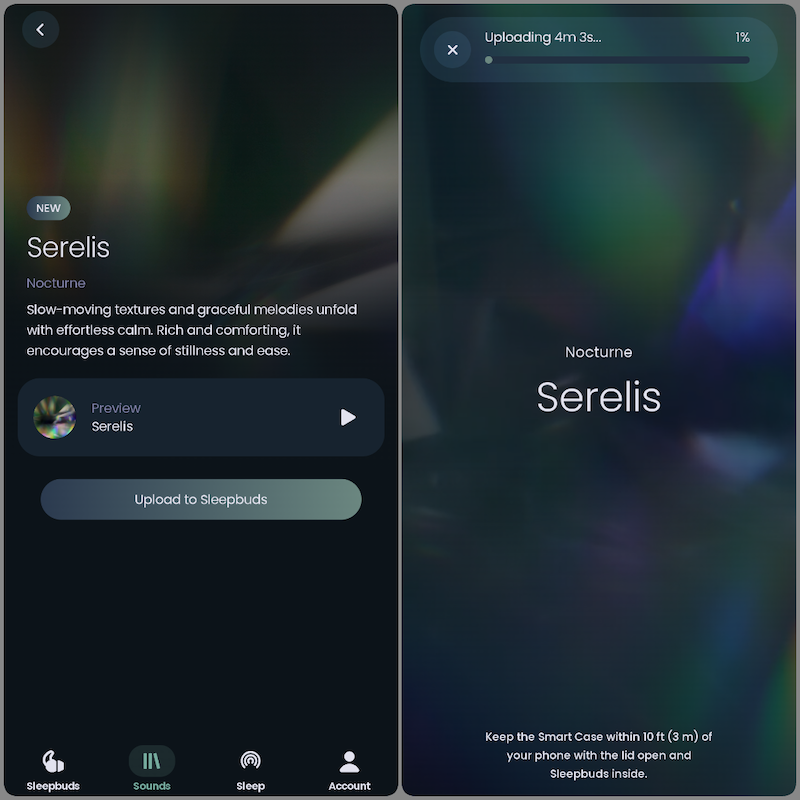 Ozlo app shows progress uploading my custom sounds under the stock Serelis name.
Since we’re hacking this in, the app shows the name and artwork of whichever sound you picked. The sound label is purely cosmetic, as only the audio is replaced. The in-app “sound preview” also plays Ozlo’s sound file because it fetches the sound blob from Ozlo’s servers instead of touching your file. You can only verify the result of your custom sound by listening through your Sleepbuds after the transfer.
While not necessary, if you want to watch the transfer work, run this in another terminal before you start:
adb logcat -c
adb logcat 'OZLOPATCH:E' '*:S'
You’ll see this log once per ear:
E OZLOPATCH: INJECTED bytes=372728
The number is your file’s size, so it should match mine_left.bin. The log message confirms your file was the one staged for transfer.
A purple LED is displayed while transferring new sounds to my Ozlo Sleepbuds 2.
If the transfer completes, select the sound in the Ozlo app, pop your Sleepbuds in, and give it a listen! You should now have custom sounds loaded directly into your Sleepbuds that are ready to use independently of your phone.
Troubleshooting
| Symptom | Cause | Fix |
|---|---|---|
| Progress never leaves 0% | File too big. The Sleepbuds refuse at the handshake, so the transfer never starts. | Re-encode with fewer --frames. |
INJECTED bytes= appears, still stuck at 0% |
Patch is fine; size was refused. | Same as above. |
| Ozlo’s original sound plays on the Sleepbuds after transfer | Substitution didn’t happen. | Check logcat for INJECTED bytes=. If missing, run ozlo-patch.py work --verify. |
| Original sound plays after reinstalling the app | It’s possible that the sound files were accidentally “updated” in the app. If you accidentally start to update the sounds, they’re immediately deleted. | Push them again using your patched app. |
| Glitchy digital noise | Wrong audio settings. | Don’t change FRAME_BYTES, SRATE or FRAME_US in ozlo-encode.py. They must stay 120 / 48000 / 10000. |
| Transfer won’t start after you cancelled one | Sleepbuds still waiting on the old transfer. | adb shell am force-stop com.ozlo.vanwinkle, place Sleepbuds in case, close and reopen the lid, retry. |
INSTALL_FAILED_UPDATE_INCOMPATIBLE |
A copy signed by a different key is still installed, possibly only in another (work?) profile. | adb uninstall com.ozlo.vanwinkle, then install again. |
INSTALL_FAILED_MISSING_SPLIT |
You left out a split. | Install every SIGNED-split_config.*.apk. |
| Play Store won’t reinstall the official app after you uninstalled from the launcher | The launcher only removed it from the profile you were in. The package name is still held by your signed copy in another profile, so the official one can’t install over it. | adb uninstall com.ozlo.vanwinkle (removes it for every user), then install from the Play Store. |
| Play Store shows an Ozlo update that keeps failing | Expected. Signature mismatch means the update is refused. | Ignore it, or turn off auto-update for Ozlo, or uninstall the patched app and install the Play Store variant. |
Reverting
To go back to the Play Store releases, use adb to first uninstall the patched app; not the phone’s uninstall button. I think this has something to do with the signing keys changing.
adb uninstall com.ozlo.vanwinkle
Then install Ozlo from the Play Store.
To put stock audio back in a slot, transfer any sound normally with the official app.
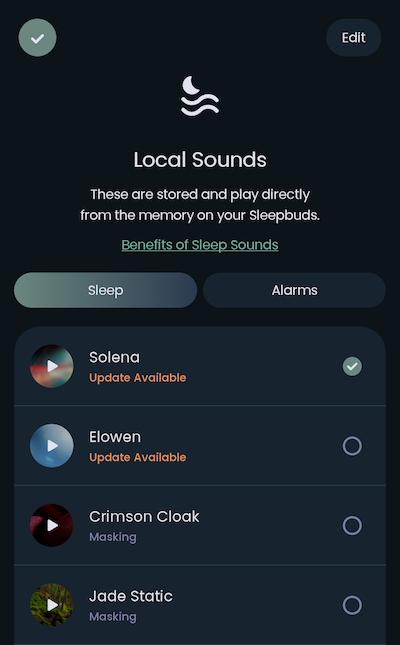 Ozlo app shows sound updates available for my uploaded custom sounds.
You’ll notice your modified sound will have an “Update Sound” option. That’s because the custom sound doesn’t match the checksum of what’s being served by Ozlo (obviously). If you accidentally start updating your custom sound, it will be immediately erased from your Sleepbuds.
Additional Technical Findings
Here’s a list of additional technical findings that don’t really fit anywhere else in this post, but are incredibly valuable to understand if someone wants to take this project further.
LC3 in liblc3’s container: 48 kHz, mono, 10 ms frames, 96 kbps, with an 18-byte header followed by each frame prefixed by its 2-byte length. ozlo-encode.py writes the header; the field layout is the struct.pack call in write_sound(). The format lives in the Sleepbuds’ firmware rather than the app, so .bin files stay valid regardless of what Ozlo ships next unless they decide to make substantial changes in the firmware.
These three constants are not adjustable:
FRAME_BYTES=120SRATE=48000FRAME_US=10000
When testing, an 88 kbps encode (110-byte frames) transferred and did play, but as unrecognisable digital blipping. Which fits the firmware assuming a fixed 122-byte stride and ignoring the per-frame length prefix. That test changed frame size, frame count, and header bitrate together. So fixed-stride is the likely explanation rather than a proven one. Either way, changing them produces noise, not a smaller file.
Raw PCM does not work. Published notes on the older Bose Sleepbuds, and the SleepBuds2Revival project, describe the on-device format as raw 8192 Hz 24-bit mono PCM. That is wrong for Ozlo hardware. Raw PCM is refused, and the transfer never starts. One clue that it can’t be 24-bit samples is that the stock blob size, 353,696, isn’t divisible by 3.
Size limit: 372,728 bytes, or 3055 frames, or 30.55 seconds. One frame more is refused.
The “about 29 seconds” figure you’ll see quoted is just the size of one of Ozlo’s own stock blobs, 353,696 bytes. That’s a safe target because the Sleepbuds obviously accept it, but it isn’t the limit. I bisected the real one because I’m weird:
| Bytes | Frames | Duration | Result |
|---|---|---|---|
| 212,054 | 1738 | 17.38 s | Succeeds |
| 353,696 | 2899 | 28.99 s | Succeeds (stock blob size) |
| 372,728 | 3055 | 30.55 s | Succeeds (the limit) |
| 372,850 | 3056 | 30.56 s | Fails to transfer |
| 385,172 | 3157 | 31.57 s | Fails to transfer |
Since 3055 works and 3056 doesn’t, that’s the boundary to the frame. Two things it rules out: the limit isn’t a round 30 seconds, and it isn’t the stock blob size, which sits 156 frames below it.
An oversized file is refused during the handshake, so the transfer never starts at all. You get no progress, rather than a half-written sound, which is what makes probing for this fast. If you experiment, note that after a refusal, the Sleepbuds keep waiting on the cancelled transfer. So adb shell am force-stop com.ozlo.vanwinkle plus a case-and-lid reset is needed before the next attempt. If you skip that, the next transfer will appear to fail too, but for the wrong reason.
Header quirk you can ignore. Ozlo’s own stock blob that I tested declares nsamples for 2900 frames while containing 2899, off by one 10 ms frame. ozlo-encode.py writes a self-consistent value instead, and that transferred and played correctly at several sizes, so the firmware doesn’t appear to check it. Not sure why, but there’s no need to reproduce the off-by-one.
It’s still unknown whether the limit applies to bytes or duration, since at a fixed 96 kbps, those are proportional and nothing I could test separates them.
When a New App Breaks This
Your existing sounds should be safe when the official app updates since they live onboard the Sleepbuds. A newer app can stop this patching method from working, but it shouldn’t erase what you’ve already transferred (that would be a nightmare forcing sound updates right before going to sleep).
The most likely thing that will need to change in the future is the values that ozlo-patch.py reads from your files to patch.
Things no script can rescue:
- Obfuscation. Ozlo currently ships readable internal names. If they mangle them, every search term here is meaningless, and the code has to be found from scratch. (Ozlo, please don’t do this! 🙏)
- No intermediate file. This works because the app writes the sound to disk and reads it back. If a future version streams straight to the Sleepbuds, there’s nothing to swap.
- Signed sound files. Sounds carry a simple checksum today. If real signing is enforced inside the Sleepbuds, we’re toast.
In practice, you’re insulated from most of the risk. If you keep your signed APKs and keystore, this will keep working for a reasonable time. The risk isn’t Ozlo pushing an update; it’s you needing to reinstall someday and finding the patching no longer matches whatever version is current by then.
Conclusion
I’ve been a consumer of various Sleepbuds products (and a repeat purchaser of some) for over 7 years.
- 2019: Bose Noise-masking Sleepbuds
- 2020: Bose Noise-masking Sleepbuds (Warranty replacement)
- 2020: Bose Noise-masking Sleepbuds (Warranty replacement again 🙄)
- 2020: Amazfit ZenBuds (Indiegogo)
- 2020: Bose Sleepbuds II
- 2022: Bose Sleepbuds II (Refurbished pair as a backup)
- 2023: Ozlo Sleepbuds (Indiegogo)
- 2026: Ozlo Sleepbuds 2
However, none of the products I’ve used have active noise cancellation, like the Anker A30. While I think active noise cancellation would mask sounds even better, I don’t think the battery life and size profile tradeoffs are worth it. Especially as someone who is a side sleeper.
This project has elevated the battery life of my Ozlo Sleepbuds 2 from great to exceptional by switching playback to the onboard sounds. Seriously, I have 0% battery anxiety with these things now. I think this might even help me get an extra year or two out of the batteries before their degradation becomes a problem.
The best part is that I have my favorite sound loop back in my sleep routine. The (Bose) Songbirds have returned to my Sleepbuds.
Credits
- google/liblc3: LC3 encoder (Apache-2.0).
- chillee151/SleepBuds2Revival: Bose Sleepbuds II BLE research. Useful background, but its audio format did not apply to the Ozlo hardware.
- Claude Code: Significant lift with executing my plan, tracing the disassembled code, applying the patches, and deconstructing the
*.binaudio files to determine how they were encoded using known signatures.
Disclaimer
This may breach the app’s terms of service. It documents interoperability research on hardware I own. You’re responsible for what you load onto your own devices.